
Focus finder
Begin with what brought you here.
Choose a headline, study, personal story, or invitation. Signalframe changes the opening contact sheet without deciding what you should conclude.
 SIGNALFRAMERohiths Foundation
A documentary field atlas
Signalframe turns the act of reading brain-research stories into a slower, more human practice: notice what was observed, ask who was included, find the comparison, and keep uncertainty in view.

FIELD NOTE / A useful question begins with what could actually be noticed, recorded, or compared.
Rohiths Foundation
Public federal records identify Rohiths Foundation as a tax-exempt organization based in Lake Stevens, Washington, and place it in the NTEE H48 category associated with brain-disorders research.
Those records establish an organization identity and classification. They do not, by themselves, describe current programs, staff, clinical services, research projects, eligibility, partnerships, outcomes, or a public contact channel. Signalframe does not turn those unknowns into claims.
The app is an original educational interpretation: a research-literacy experience designed around the domain suggested by the public classification. Its prompts, stories, activities, interface, and imagery are app-authored material rather than representations of an unverified Foundation program.
Record boundary: identity and classification are grounded in the IRS Exempt Organizations Business Master File for Washington and the federal NTEE code appendix. Signalframe makes no claim of clinical authority or publisher approval beyond the materials in its distribution package.


Inside Signalframe
The app is built like a documentary editing room. You can enter through the kind of material in front of you, move through themed reels, inspect one frame through several lenses, and assemble a short sequence of your own.
Focus finder
Choose a headline, study, personal story, or invitation. Signalframe changes the opening contact sheet without deciding what you should conclude.
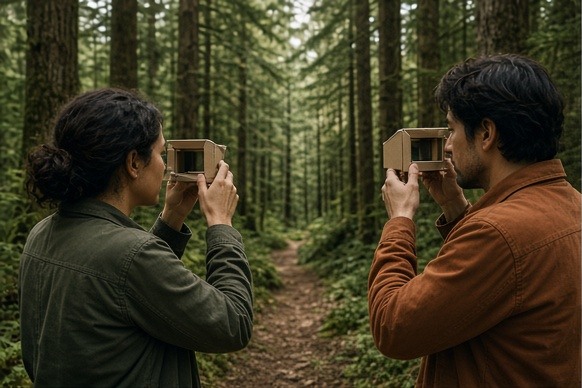
Eight field reels
Explore observation, systems, measurement, comparison, findings, dignity, lived experience, and the next question worth carrying.

Five-frame cut
Place up to five frames together. A cut can reveal a missing step, a leap in certainty, or a person pushed outside the story.

Try the light table
Designed for proportion
Signalframe treats scientific evidence as valuable precisely because it can be described carefully. Each frame offers an observation, a question, and a boundary. The boundary does not dismiss the evidence; it keeps the evidence from doing a job it cannot do.
The experience is educational, not diagnostic. It contains no symptom checker, treatment advice, trial matching, personal-health journal, free-text health field, donation flow, account, advertisement, or social feed. When a question affects care or participation, the app points back toward qualified professionals and informed human conversation.
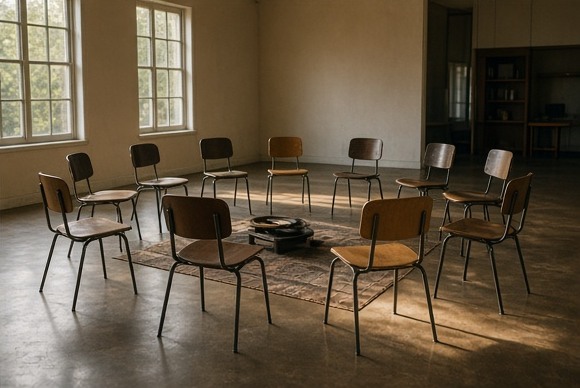
Carry the question
Save a useful frame, mark what you have examined, or clear the local archive. The work remains yours and stays on your device.
See how local privacy works